Click to see the prototype ↴
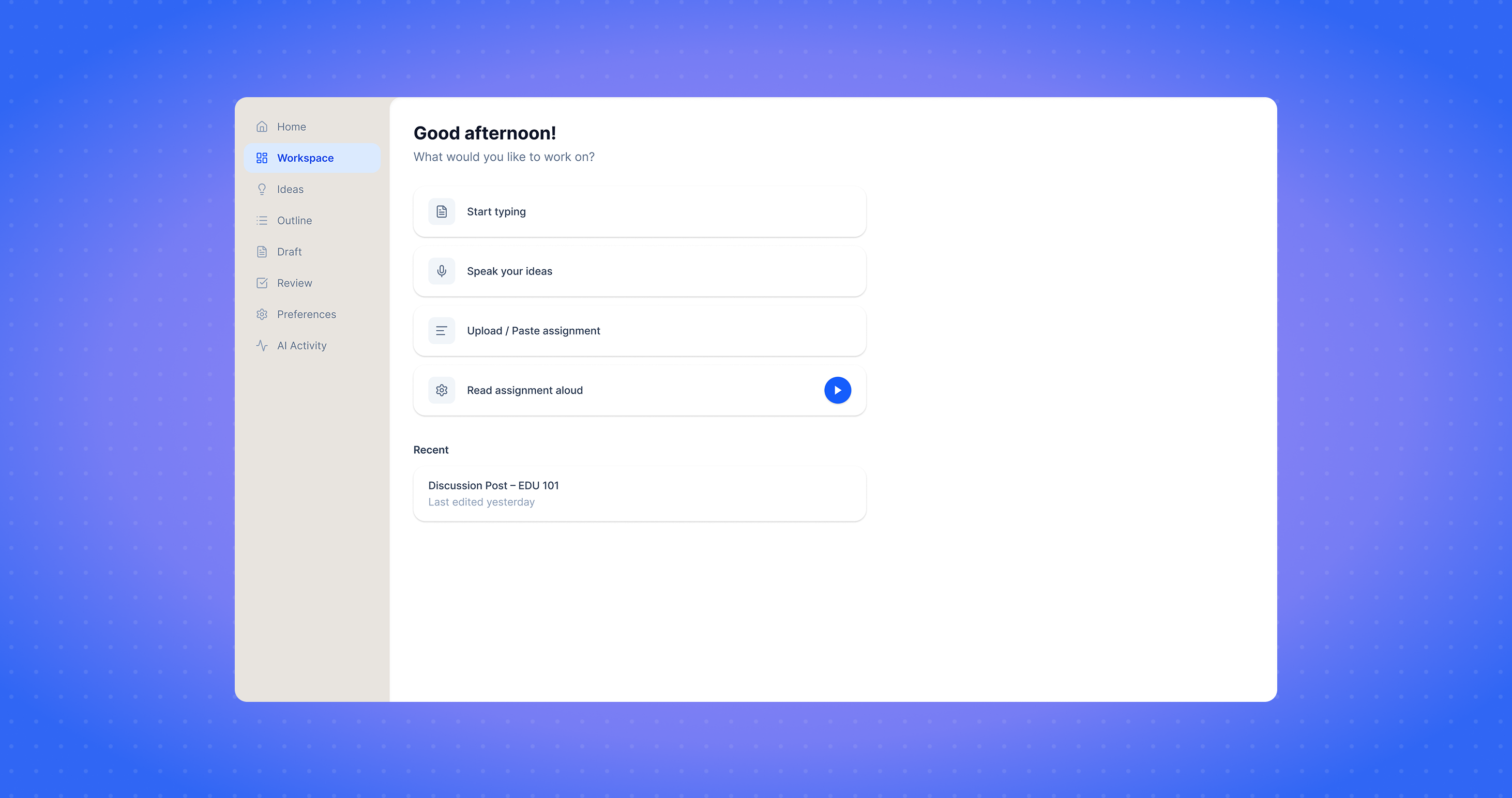
College students with dyslexia often develop personalized workflows across writing, accessibility, and productivity tools. We explored how an integrated writing environment could reduce unnecessary cognitive and interaction burdens while preserving students' control over how they write and use AI.
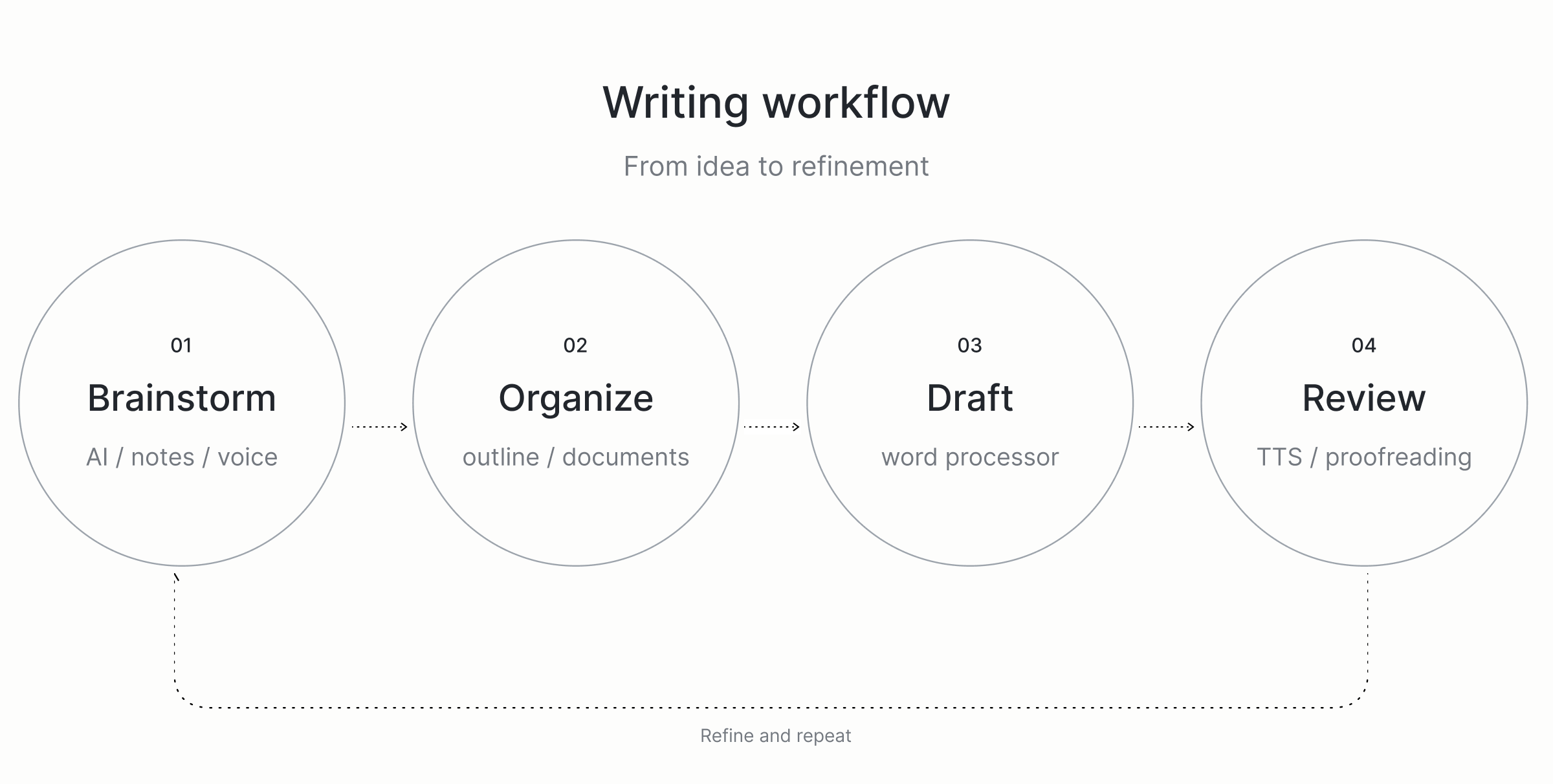
Students with dyslexia were using combinations of writing, speech, read-aloud, proofreading, and accessibility tools to support different stages of their workflow. While these tools provided valuable support, switching between them introduced additional interaction and cognitive burdens.
This project changed how I think about accessibility.
Rather than designing a single “accessible” configuration, I learned that accessibility often means giving people control over the strategies, modalities, and levels of support they use.
It also changed how I approach AI-assisted experiences. The goal isn't simply to automate a task. In this context, the product needed to make AI useful while ensuring that students remained authors and decision-makers.
If I continued the project, I would involve students earlier in defining the boundaries of AI assistance—particularly asking them what the system should never do automatically.